
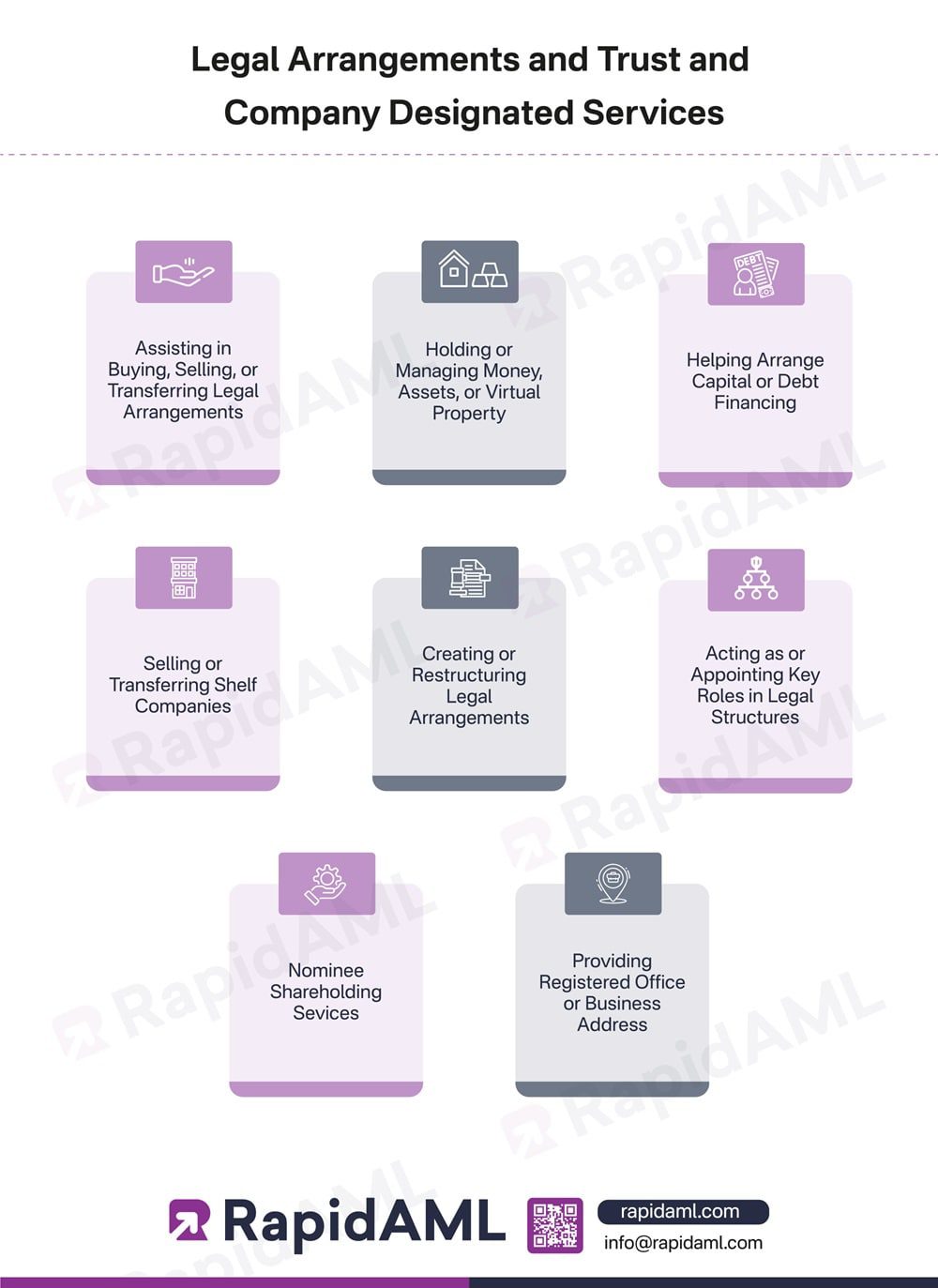
This article explains how AUSTRAC’s Anti-Money Laundering and Counter-Terrorism Financing (AML/CTF) obligations will apply to Legal, Trust, and Company Services from July 2026. Activities like helping to set up or restructure legal entities, acting on behalf of clients, and managing financial assets are now considered Designated Services under the AML/CFT Reforms.
Let us discuss them in detail.
Professionals often help clients buy, sell, or transfer companies, trusts, or partnerships. Under Tranche 2, these activities are regulated when they involve significant ownership or control.

When is Assistance in Buying, Selling, or Transferring Legal Arrangements Covered Under the Tranche 2 Regulations?
Under the AML/CTF reforms, when professionals help in planning or providing assistance during the purchase, sale, or transfer of a legal arrangement such as a company, partnership, or trust, it will now be covered under Tranche 2 regulations. This includes acting on a client’s behalf in the transaction. It is only applicable when the client:
making such transactions subject to strict compliance requirements.
While assisting in legal arrangements, who is the customer?
For providing assistance in Legal Arrangements under Tranche 2, the person represented in the transaction for whom assistance is being provided is the customer.
Exclusion
Transfers that occur due to a court or tribunal order are excluded from Tranche 2 obligations.
Legal Reference
This is listed under Item 2, Table 6, AML/CFT Amendment Act 2024.
Example
A lawyer assisting a client in purchasing a business where the client will hold 30% of the shares is performing a service that falls within Tranche 2 AML/CTF obligations.
Managing client funds, whether in cash, securities, or virtual assets, now attracts compliance duties when linked to transactions.

When is Holding or Managing Money, Assets, or Virtual Property Covered Under the Tranche 2 Regulations?
Under the AML/CTF Amendment Act 2024, when a service provider holds or manages money, accounts, virtual assets, securities, or any other property as part of a transaction for a customer, it is considered a designated service. This includes holding sale or purchase funds in escrow, managing a bank account, or controlling securities or virtual assets on behalf of a client.
Where such involvement directly relates to planning or carrying out a transaction, AML/CTF obligations apply, requiring regulated oversight and compliance.
While Providing the Service of Holding or Managing Money, Assets, or Virtual Property, Who is the Customer?
While providing the service of holding or managing money, assets, or virtual property, the customer is the person whose funds, accounts, or assets are being held or managed during the transaction.
Exclusion from Tranche 2
Ordinary trust accounts that are not linked to business transactions are excluded (e.g., a law firm that only handles criminal cases).
Legal Reference
This is listed under Item 3, Table 6, AML/CTF Amendment Act 2024.
Example
An accountant who manages a client’s loan repayment by making payments directly from the client’s bank account.
Helping raise capital or structure debt financing, from IPOs to venture deals, is now regulated because it can be used to introduce illicit money.

When is Helping Arrange Capital or Debt Financing Covered under Tranche 2 Regulations?
When professionals assist in organising, planning, or carrying out capital raising or debt financing for a body corporate or legal arrangement, it is covered under AML/CTF Reforms. This includes services such as structuring, negotiating, or documenting equity or debt financing deals, including Initial Public Offerings (IPOs), venture capital deals, bonds, debentures, loans, and asset financing.
Where such involvement directly supports the client in securing or managing financing, AML/CTF obligations apply, requiring careful due diligence and compliance.
While Providing Assistance as to Arranging Capital or Debt Financing, Who is the Customer?
While providing assistance with arranging capital or debt financing, the customer is the person or business raising funds or seeking financing.
Legal reference
This is listed under Item 4, Table 6, AML/CTF Amendment Act 2024.
Example
A consultant assists a start-up in securing funding from a venture capital investor.
Shelf companies may look harmless, but they can hide actual ownership. Selling or transferring them now falls squarely under AML obligations.

When is Selling or Transferring of a Shelf Company Covered Under the Tranche 2 Regulations?
When a person or business sells or transfers a shelf company, i.e., a company that has been set up but has never traded, it falls within Tranche 2 obligations. It involves selling or transferring a company that has had no prior business activity.
The compliance duty arises the moment such a company is offered for sale or transfer, regardless of its trading history. This ensures that even a dormant or unused company cannot be misused for ML/TF activities.
While Providing the Service of Selling or Transferring a Shelf Company, Who is the Customer?
The customer, while providing the service of selling or transferring a Shelf company, is the buyer or transferee of the shelf company.
Legal Reference
This is listed under Item 5, Table 6, AML/CTF Amendment Act 2024.
Example
A firm sells its unused registered company to a client for future use.
Drafting constitutions, trust deeds, or registering new entities seems routine, but under the new reforms, these are regulated due to misuse risks.

When is Creating or Restructuring Legal Arrangements Covered Under the Tranche 2 Regulations?
Under the AML/CTF Amendment Act 2024, when professionals draft or file documents to create or change a corporate body or a legal arrangement, including companies, trusts, or partnerships, they are considered a Designated Service. This includes preparing constitutions, partnership agreements, trust deeds, or lodging forms with ASIC or FIRB.
While Providing the Service of Creating or Restructuring Legal Arrangements, Who is the Customer?
The customer, while creating or restructuring legal arrangements, is
Legal Reference
This is listed under Item 6, Table 6, AML/CTF Amendment Act 2024.
Example
A lawyer registers a new company for a client and drafts its constitution.
Exclusion
Corporations under the Corporations (Aboriginal and Torres Strait Islander) Act 2006.
Taking roles like director, trustee, or power of attorney on behalf of clients makes a professional directly responsible under the AML rules.

When is Acting as or Appointing Key Roles in Legal Structures Covered Under the Tranche 2 Regulations?
When a professional serves or arranges for someone to serve as a company director, trustee, partner, or similar role with decision-making powers, it is captured under AML/CTF regulations. Acting in or arranging roles such as director, partner, trustee or partner for a legal arrangement.
While Providing the Service of Acting as or Appointing Key Roles in Legal Structures, Who is the Customer?
The customer is the nominator on whose behalf the service of acting as or appointing key roles in legal structures is provided.
Exclusion from Tranche 2
Court–appointed fiduciaries or trustees in insolvency cases.
Legal Reference
This is listed under Item 8, Table 6, AML/CTF Amendment Act 2024.
Example
A law firm arranges for an associate to act as a nominee director in a client’s new company.
When professionals act, or arrange for others to act, as nominee shareholders, they must ensure the actual owner is not hidden.

When is Offering or Arranging Nominee Shareholding Services Covered Under the Tranche 2 Regulations?
Under the new reforms, nominee shareholding services fall under Tranche 2 when a professional acts or arranges for someone to act as a nominee shareholder. These services include drafting or amending documents to authorise such roles, where the arrangement grants indirect ownership or control of shares.
While Providing the Service of Offering or Arranging Nominee Shareholding, Who is the Customer?
While providing the service of offering or arranging nominee shareholding, the nominator is considered to be the customer.
Legal Reference
This is listed under Item 8, Table 6, AML/CTF Amendment Act 2024.
Example
A lawyer arranges for a nominee on behalf of a foreign investor.
Supplying a registered address may seem like an administrative task, but it can conceal a business’s real operations, which is why it is now regulated.

When is Providing Registered Office or Business Address Covered Under the Tranche 2 Regulations?
When a professional or a business provides a registered office address or the address of the principal place of business for a company or legal arrangement, it is covered under the Tranche 2 regulations.
While Providing a Registered Office or Business Address Service, Who is the Customer?
When a registered office or business address service is provided, the customer is the person to whom the service is provided.
Legal Reference
This is listed under Item 9, Table 6, AML/CTF Amendment Act 2024.
Example
A service provider agrees to provide a registered office address to a newly formed company.
From 1 July 2026, professionals involved in Legal Arrangements and Trust and Company Services must comply with the AML/CTF obligations. This includes those offering nominee roles, managing client money, handling legal structuring, or providing a registered address. It is essential to assess whether your services fall under these new categories and to start preparing now, by proper implementation of AML Softwares and solutions.